
The Spy Who Came in from the Cold at Theatre Royal Nottingham Review
DISCLOSURE – TICKETS TO SEE THE SHOW WERE GIFTED TO THE REVIEWER AND GUEST FOR THE PURPOSES OF WRITING THE REVIEW
Reviewed by Sheridan Brown
The Spy Who Came in From the Cold is widely known as one of John le Carré’s greatest spy stories – a global best-seller, in fact. Astonishingly, the novel has never before been adapted for stage. But thanks to award-winning writer David Eldridge and Director Jeremy Herrin, this gripping tale of espionage, deception and double-dealing is brought to us in Nottingham for the first time.
Following a sold-out run at Chichester Festival Theatre and direct from the West End, the play opened last night at the Theatre Royal. I love a TV spy thriller – but I’ve never read Le Carré’s book, nor seen the film adaptation – so I was intrigued to see what all the fuss was about. The play did not disappoint; I was gripped from the very beginning to its disturbing and evocative end.
Set against the backdrop of the Cold War, the play follows the journey of British intelligence officer Alec Leamas – played by much-loved television star, Ralf Little. After long years in the field, Leamas is weary and jaded – he wants to ‘come in from the cold’. But he is persuaded to accept one last assignment. Then fate throws a curved ball. He meets a young woman, Liz. Forthright, principled and idealistic, Liz begins to get under Leamas’ skin. Can he keep a level head and complete the mission he has been given? And is the mission what it appears to be?
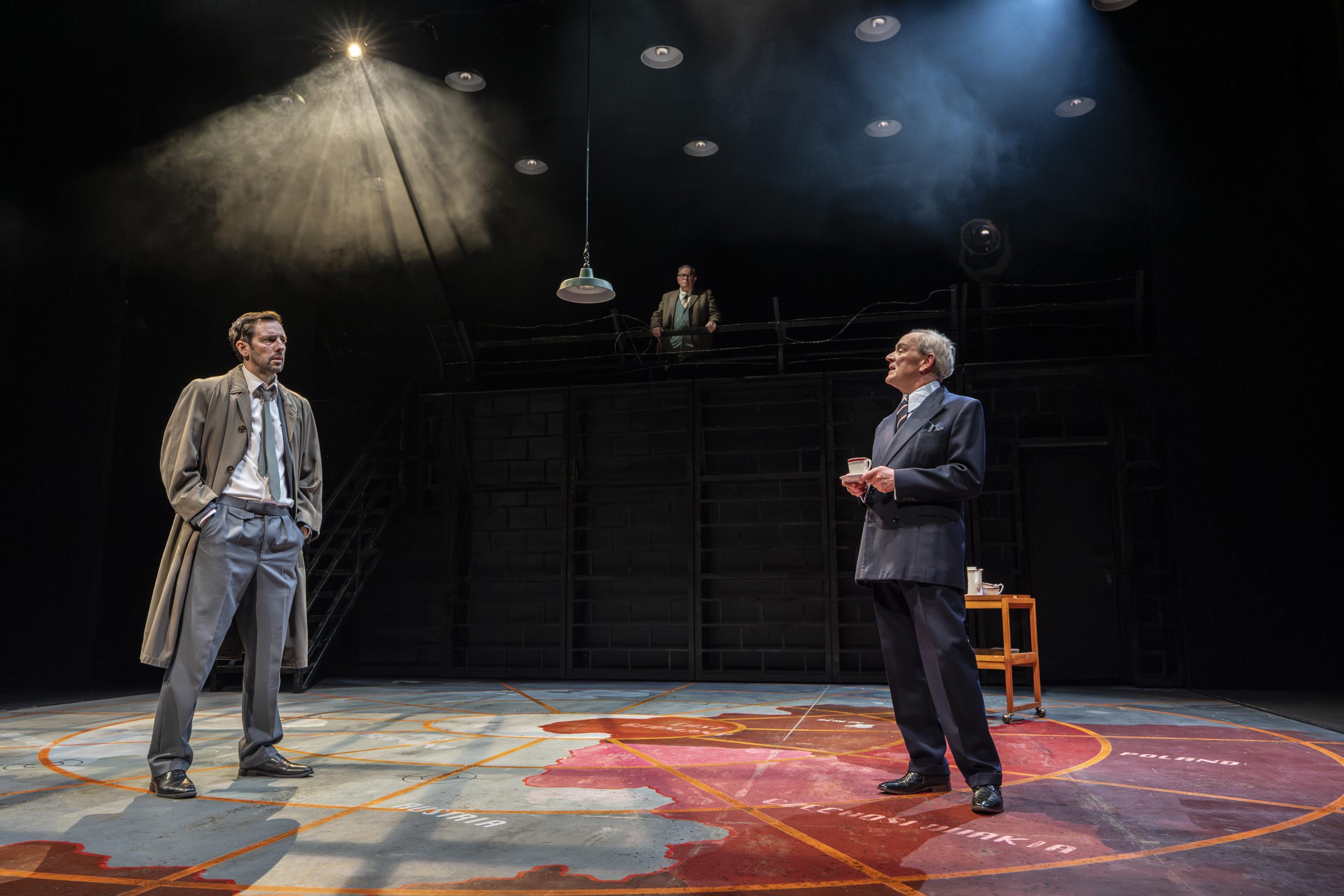
Arriving at the theatre and settling in our seats, we took in the stage. Dark, shadowy and industrial – the set, designed by Max Jones and lit by Azusa Ono, evoked a stark and oppressive greyness. Maybe this reflected the moral greyness that permeated the whole narrative of the play. A crumpled bicycle, with a still-spinning wheel was positioned centre stage.
As the play opens, we are introduced to Alec Leamas, head of a British intelligence network in East Germany. His unit has been systematically decimated by East German intelligence officer Hans-Dieter Mundt. Leamas’ last operative has just been murdered by Mundt. Disillusioned and exhausted, Leamas believes his career is over. But ‘Control’ has one last job for him.
I’ve never seen Ralf Little in anything other than light TV and comedy before and was thoroughly impressed by the quality of his serious acting. Convincing, full of gravitas and with amazing stage presence, Little captured Leamas’ flawed personality and calcified moral compass perfectly. He was able to balance a wiry physicality and sharp, intelligent dialogue beautifully. Leamas’ nemesis, Mundt was fabulously played by Peter Losasso. Mundt’s quiet but sneering arrogance, cold ruthlessness, and (frankly disgusting) attitudes was conveyed with utter believability; I found myself thoroughly revulsed by him.
It is the relationship between Leamas and Liz, played by Gráinne Dromgoole, that provides the emotional heart to the story – reminding us of the human consequences of decisions made in the name of national security. I really liked Dromgoole’s strong and matter-of-fact characterisation of Liz – that at the same time turned out to be over-idealistic and naïve. The chemistry between Little and Dromgoole provided an excellent foil for the bleakness of the Cold War story.
Whilst I’m sure they were important to reveal the machinations and moral ambiguities of the spy world, interactions between Leamas and Control (played by Nicholas Murchie) or spymaster George Smiley (played by Tony Turner) held less human interest for me. Maybe the fact that they felt devoid of humanity was significant, after all.
The play takes us from the East/West German border, to foggy and atmospheric London and on to The Hague and back to East Germany. Jeremy Herrin’s direction uses atmosphere, pace and performance to generate suspense. The story unfolds with steady, almost relentless momentum. In scene after scene, another piece of the puzzle is revealed. It turns out Leamas is as much in the dark as the audience is.
Music, lighting and movement all play an important part of the play. The choreography of movement (Lucy Cullingford) in between scenes was fabulous – almost balletic in places. The cast seamlessly moved props and aided costume changes, moving with pin-point precision and right on the beat. Scene changes were also supported by wonderfully evocative ‘spy genre’ music – composed by Paul Englishby. Lighting (Asuso Ono) and sound design (Elizabeth Purnell) created further depth of atmosphere and mood. A moment, right at the end of the play, when we hear, again, the ticking of a bicycle wheel turning was very evocative.
More than sixty years after the novel’s publication, the play reminds us that its original themes are still strikingly relevant. Questions about state power, surveillance, truth and moral responsibility continue to resonate in a world that feels increasingly uncertain. I felt that this production shone a light on these questions anew.
I’d thoroughly recommend The Spy Who Came in from the Cold at the Theatre Royal Nottingham. It’s an amazing venue and a thought-provoking production, still relevant today.
Rating: 4/5
Dates: Tuesday 23 June – Saturday 27 June, 2026
Tickets: £23.50 – £51.00
Remaining shows are bookable here: www.trch.co.uk