
How to use sunscreen
by Dr Deborah Lee, Dr Fox Online Pharmacy
30% of Brits admit they get at least one episode of sunburn a year! Around 200 people are admitted to hospital in the UK every year from sunburn, including 25 babies under one year of age. Many more attend A&E with sunburn and heat-related illnesses. This is a tragedy as these could have been prevented.
Now spring has arrived, it’s definitely time for sunscreen. This applies to us all – babies aged 6 months and older (younger babies should be kept out of the sun), children, adults and the elderly. Everyone needs to protect their skin – and we all need to be using sunscreen.
What is sunscreen?
Sunscreen is a skin product that protects your skin from the sun. It is applied to the skin, to block the effects of harmful ultraviolet (UV light). Sunscreen is available as a lotion, spray, gel or a stick.
UV and skin damage
UV causes skin ageing – It is the primary cause of premature skin ageing, as it breaks down collagen and causes skin sagging, wrinkling and age spots.
UV burns the skin – Sunburn significantly increases the risk of skin cancer. Just one episode of blistering sunburn in childhood doubles the risk of melanoma in later life.
Using sunscreen blocks UV from penetrating the skin and greatly reduces these risks. Most of these risks are from UVB light, but UVA light can cause sunburn too. When choosing sunscreen you need one that is not just anti UVB but also anti UVA.
What does sunscreen do?
The British Association of Dermatology (BAD) recommend you check the star rating system. and use a product with at least 4 out of 5 stars.
Types of sunscreens
There are two types of sunscreens – physical and chemical.
- Physical sunscreen contains titanium or zinc oxide which work by reflecting and scattering the sun’s rays. They are usually white in colour and can be seen on the skin.
- Chemical sunscreens contain chemicals such as oxybenzone or octinoxate. These absorb UV and transfer it into heat which is dissipated from the skin. They need to be more frequently applied.
Some sunscreens contain a combination of products.
Don’t feel you need to pay for luxury brands to get a better product. Well-known high-street brands offer excellent skin protection.
How much sun protection do they provide?
Sunscreen is graded by how much sun protection it provides. This is called the Sun Protection Factor (SPF). For example, SPF 30 means you can stay in the sun 30 times longer without burning than if you did not use sunscreen. Broad spectrum sunscreen protects against both UVB and UVA light.
When to use it
White skinned people should use sunscreen when the UV index is 3 or above. For those with black or brown skin, they should use sun protection when the UV index in 11 or over. UV is rarely over 7 in the UK.
Other people who need sunscreen are those with lack of pigmentation in the skin such as vitiligo, photosensitive skin conditions, lupus, or if you are taking immune suppressants for example after an organ transplant.
How to apply it
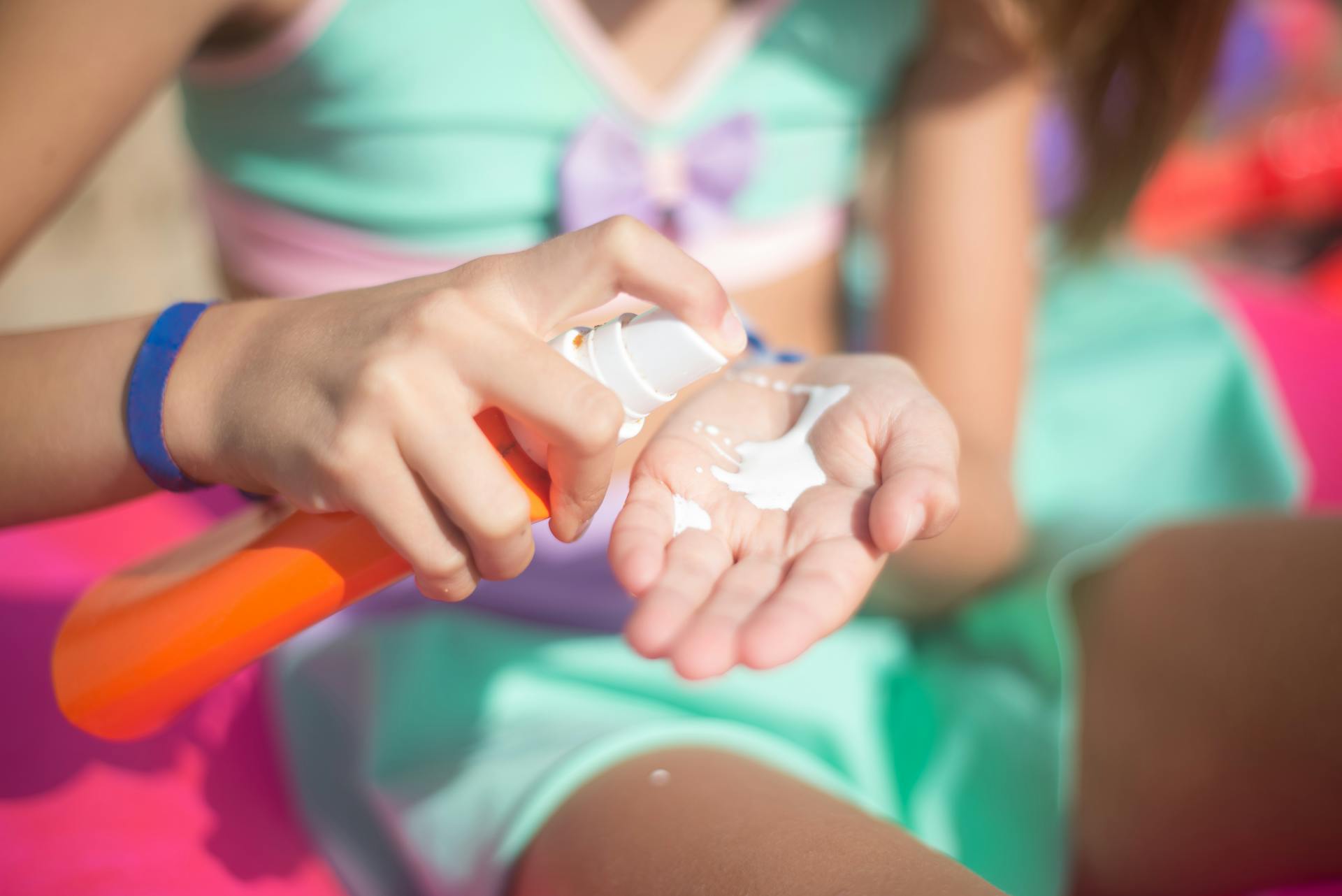
- Apply the sunscreen generously to the skin 15 – 30 minutes before going outside.
- Reapply for the first time 15-30 minutes later. The first application is absorbed into the skin and the second application dries on the skin. By doing this twice you will cover any areas you might have missed.
- Continue to reapply sunscreen while you are outside every 2 hours or after any sports or swimming.
- If using make up, always apply sunscreen first and make up afterwards.
Note that people manage to make sufficient vitamin D in the skin from sunlight, even when using sunscreen. However, the NHS recommends UK adults take a vitamin D supplement, 10 mcg (400IU) every day from October to the end of March. Check the NHS website for the correct vitamin D dose for babies and children.
Other sun protection
Don’t rely on sunscreen alone to protect your skin. Excess heat can cause heat exhaustion and heat stroke, and the sun is most powerful in the middle of the day.
- Stay in the shade between 11 am and 3 pm.
- Wear a wide brimmed hat – a baseball cap leaves your ears and neck exposed.
- Wear sunglasses with UV400 protection. Look for the CE or UKCA mark to check the meet recommended standards.
- Babies under 6 months should be kept out of the sun. Older babies should be kept out of the sun between 11 am and 3 pm. Make sure there is a sunshade or parasol over the pushchair and keep in the shade. Look fir sunscreen that is formulated especially for babies and young children.
Out of date sunscreen
Never use out-of-date sunscreen. It tends to separate, form clumps, and the products deteriorate. Generally, sunscreen lasts about 30 months. Look for the Period After Opening (PAO) symbol.
Final thoughts
Using sunscreen from now on and through the summer months is vital to stay healthy this summer. Why not think ahead and ensure you have a read supply when you venture outside. You don’t need to pay the earth for good skin products. Using these wisely will help protect your skin against sun damage now and in the future.
For more information
- British Association of Dermatology (BAD) – Sun Protection Fact Sheet