
The Beekeeper Of Aleppo At Nottingham Playhouse – Review
DISCLOSURE – TICKETS TO SEE THE SHOW WERE GIFTED TO THE REVIEWER AND GUEST FOR THE PURPOSES OF WRITING THE REVIEW
Reviewed by Sheridan Brown
Last night I was delighted to attend the opening night of The Beekeeper of Aleppo at Nottingham Playhouse. Adapted for stage by Nesrin Alrefaai and Matthew Spangler – and based on the acclaimed novel by Christy Lefteri – the play tells the powerful story of a couple fleeing war-torn Syria. But the play isn’t just a simple account of their journey across Europe to the UK. The play gives us a heartbreaking glimpse into the potential emotional and physical devastation of that journey. In the theatre programme, writers Alrefaai and Spangler share that they understand theatre’s power as a tool for challenging stereotypes and for humanising the story behind the statistics. Day after day, we are presented with media narratives that erase the humanity of those who seek refuge in our country – or tell downright lies about their circumstances. This play calls out those lies – and offers a space in which to tell some of their stories and ‘allow the audience to connect with the humanity of the storytellers’.
Getting to Nottingham Playhouse was very easy. I decided to take the tram into Nottingham city centre; a very easy 25-minute journey from Clifton South Park and Ride. Getting off the tram at Royal Centre tram stop, I walked to Nottingham Playhouse in around 7 – 8 minutes. Arriving at the theatre I was warmly greeted (as always) by very helpful staff. Again, nothing was too much trouble and I felt very well looked after. As I was waiting to meet my friend in the foyer, I noticed there was a lovely buzz of folks meeting up and chatting excitedly about the upcoming performance. The theatre was very busy and it felt like a full house.
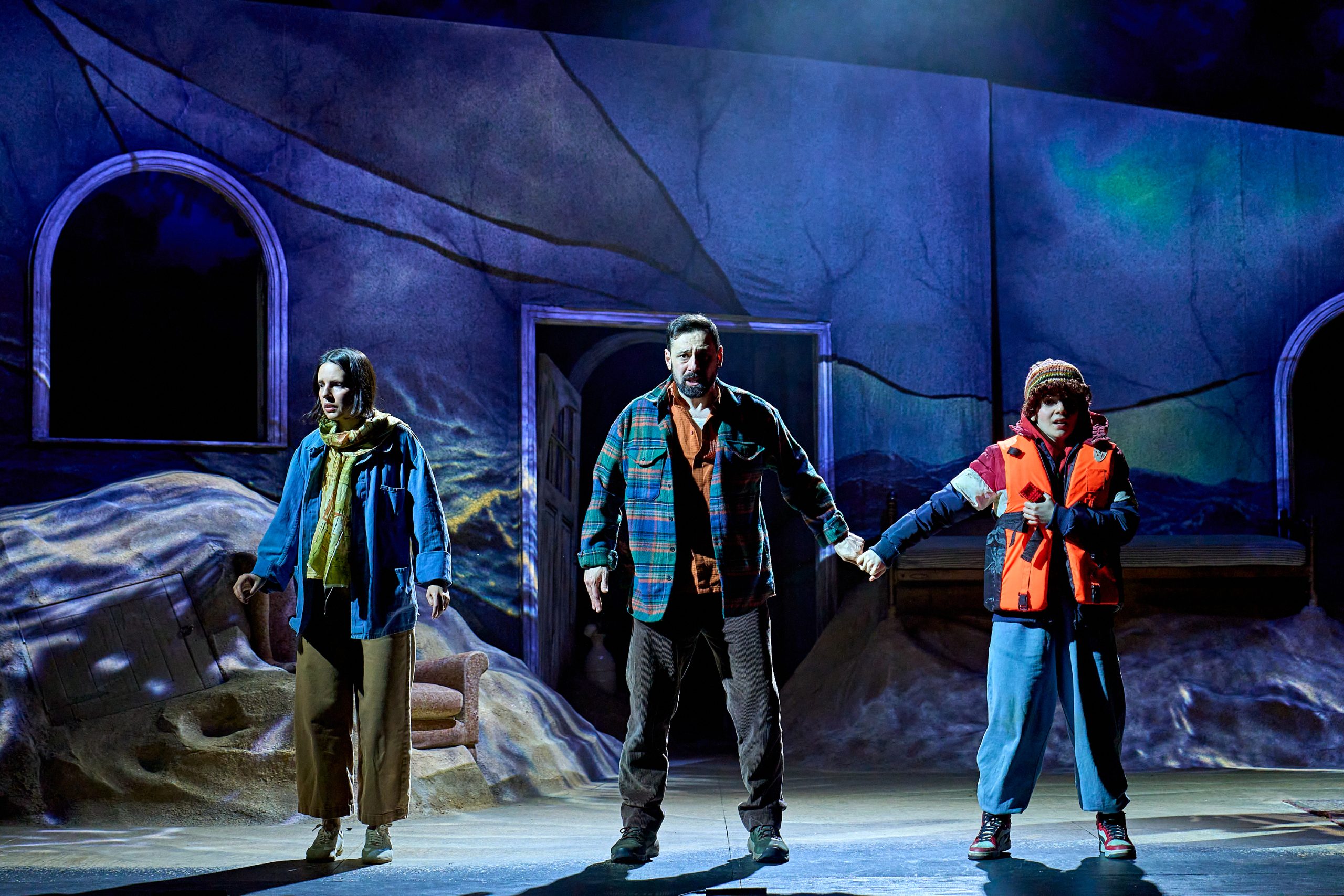
Directed by Anthony Almeida, the play centres on the story of Syrian beekeeper Nuri (beautifully played by Adam Sina) and his wife, Afra (played by Farah Saffari in her first lead role). We know, from early on in the play, that they make it to the UK as refugees – but the physical journey is only one layer of the story. Through a series of flashbacks, we get a glimpse of their happy, family-focused lives in Aleppo. Then their world is turned upside down by the Syrian civil war. After a series of horrors, they are finally forced to flee.
As they embark on their terrifying journey from Aleppo across Turkey, Greece, and finally to the UK we begin to understand the trauma they have both faced – and how their lives have unraveled. Sometimes the play makes for a difficult watch and can be harrowing. But there is also some light and humour to offset the trauma. Joseph Long, playing Nuri’s cousin Mustafa and ‘Moroccan Man’ brings warmth and brilliant comic timing to the play. The rest of the cast play multiple roles – telling the stories of other refugees, those who take advantage of them, and the officials who judge them. I was full of admiration for their talent and dexterity in switching from one character to another. Dialect Coaches Nadia Gattan and Louise Jones did an admirable job in preparing the actors for their roles – so many nations represented. Big shout out to Dona Atallah whose characterisation of Mohammed/Sami was beautiful, believable and a little bit ethereal.
The set is cleverly designed by Ruby Pugh. Whilst there are no physical set changes, we are taken to many different places and times in Nuri and Afra’s journey. The stage is dressed with piles of sand, oddly embedded with pieces of household furniture. I wondered if this was to suggests the fragility of what Nuri and Afra held dear, and how the sands of time can sweep everything away. The cast use the set fully and different props take on different meanings. At one point the bed becomes a tiny inflatable boat crowded with terrified people in the jaws of a storm; incredibly powerful and gripping. The skillfully designed video projections by Zsolt Balogh have an important role in providing the audience with the information required to follow the different locations of the story. These powerful projections contribute significantly to the emotion of a scene – for example, actual news footage from the war, animations of Aleppo falling into ruins or the fearsome rage of the sea as the refugees try to make the crossing to Europe.
Whilst this is a story about Nuri and Afra’s physical escape from the horror and loss of war, is also the story of the emotional ravages inflicted by war and subsequent displacement. They both saw and experienced truly terrible things. Adam Sina and Farah Saffari’s playing of these roles was superb. There was a particular moment in the play where Afra repeatedly reached forward, then fell back to the ground. Again, and again she made this movement. It was only later, as I reflected on this scene, that I realised what it depicted – and felt the emotion of the play all over again.
This play is not always easy to watch. I guarantee you will not leave the theatre the same person. It is powerful, visceral and deeply, deeply human. Please go and see it if you can.
Rating: 5/5
Dates: 12th February – 28th February 2026
Tickets: £14.50 – £41.50. Pay What You Can tickets are also available on Thursday 19th February. Find out more here: https://nottinghamplayhouse.co.uk/pay-what-you-can/
Remaining shows are bookable here: https://nottinghamplayhouse.co.uk/events/the-beekeeper-of-aleppo/