Halle Orchestra St Georges Hall Bradford Review
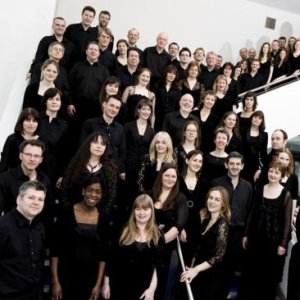 Halle Orchestra
Three Slavic Masterpieces
St George’s Hall, Bradford
10 May 2014
Reviewed by Chris Legg
The programme of this concert, in St George’s Hall, Bradford, consisted of Enescu’s Romanian Rhapsody no.1, Prokofiev’s Piano Concerto no.3 and Rachmaninov’s Symphony no.2. As part of my job was to assess the quality of the performances, not just of the pieces themselves, I thought it would be a good idea to put together a playlist on Spotify beforehand, so that I could become familiar with their “architecture”, the better to appreciate the nuances of interpretation on show. Not too familiar, mind, as it’s very easy to become over-used to a particular recording, with the result that you end up unfairly comparing someone else’s interpretation unfavourably to that recording simply because it’s different, so I limited myself to four fairly well-spaced listens.
The Enescu and Prokofiev were unknown to me before doing so. The former is essentially a parade of attractive, folky tunes that nevertheless gives the players plenty of scope for fireworks and general showing-off. The latter is a frequently sunny piece, perhaps typical of Prokofiev’s mature style in combining unabashed lyricism and athletic high jinx with spiky “modernist” harmonic sidesteps. But it also has extended passages of a hushed, haunted quality that give soloists chance to display their expressive side as well as their virtuosity.
The Rachmaninov I’d heard a couple of times before, and it’s always struck me as a bit “Rach-by-numbers”, with plenty of his trademark unashamedly syrupy “big tunes” amidst the gloom, and less interesting than his other two symphonies or, say, the piano concertos. That said, I admire the often imaginative way in which he develops his material, and the restraint he shows in, for example, resisting the obvious temptation to restate the famous “big tune” that kicks off the slow movement in full at that movement’s climactic point or, for that matter, at the very end of the symphony. This reminds us that Rachmaninov didn’t intend such episodes to be the self-conscious “Hollywood moments” it’s all too easy to hear them as today, but more as wistful visions of a happier life forever just beyond the reach of this most depressive of composers. Nevertheless, in short, I went expecting to have this piece sold to me like never before.
And sell it to a half-full but attentive St George’s Hall they certainly did, but more on that later. The first half of the concert commenced with conductor Cristian Mandeal using subtle variations of tempo and dynamics to turn Enescu’s parade of crowd-pleasers into genuine story-telling. This listener pictured revellers turning up at a country dance in small groups, quietly at first, but full of expectation for good times ahead, before later becoming ever wilder in their celebrations as each dance led drunkenly to the next. During the Prokofiev, I had a clear view of pianist Sofya Gulyak’s face, and while she negotiated the many fiendishly difficult virtuoso passages with seeming effortlessness, I could tell that she was as transported by the ghostliness of the slower, quieter passages as her audience. The orchestra, for their part, were willing conspirators with her through every twist and turn of this emotional rollercoaster, managing the many tricky tempo changes with ease in what for me was a thrill-ride from beginning to end.
After the interval came the Rachmaninov, halfway through the first movement of which I found myself thinking, “Reservations be damned – I’m really enjoying this!” The acid test for me was whether the “big tunes” avoided the “Hollywood trap”. This they did with style, being delicate and expansive, but never turgid, allowing the true purpose I mentioned above to become clear. And the darker moments often verged on the genuinely frightening, although this may have been due in part to my sitting at the side of the auditorium nearest the percussion and deep brass! Or maybe not, as the pin-drop silence with which such episodes were received suggested that the feeling was general. Above all, the clarity of the textures that Mandeal drew from the Halle allowed something that I’d never fully appreciated before – the genius of Rachmaninov’s orchestration – to shine through. In particular, those Cinderella’s of the strings, the violas – one of which I could have sworn was wielded by none other than Hugh Bonneville of Downtown Abbey fame – got a potent workout at several key moments.
I doubt that “Rach 2” will ever be my favourite symphony, but thanks to Mandeal’s Halle I now like it a lot more than I did, and provided that they can iron out the one or two “bum notes” I heard in the horns, I’d quite happily let everyone responsible for the night’s music-making sell less-than-favourite music to me again in the future.
Rating: 4.5/5
St George’s Hall. Bridge St, Bradford, West Yorkshire BD1 1JT | Box Office 01274 432000